
Decorate with Fall Flowers
 Mark Adams
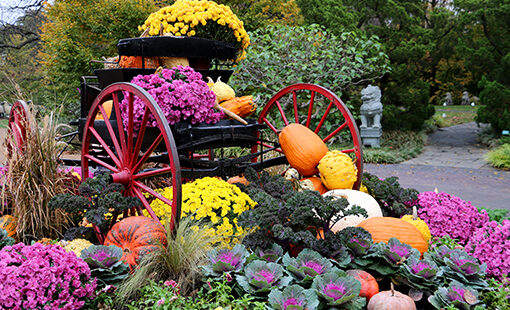
 A sneering jack o’ lantern, flanked by cornstalks and a miniature bale of hay, looking out from the front porch on a menagerie of inflatable ghosts, dragons and black cats, sometimes inflated but too often looking like a rainbow colored puddle. If that describes your house, why not try something different this year and decorate with these exciting fall flowers (and vegetables):
Hardy Chrysanthemums
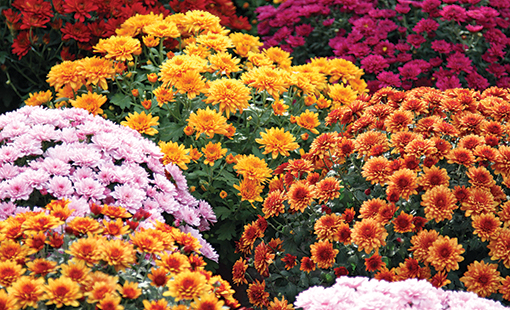
Fall “mums” are not exactly hardy in the Hudson Valley, but they're too beautiful to ignore. Most folks don't plant them anyway – just set them on a table or next to the pumpkin. If you want to grow them as a perennial, so they come back every year, plant the mums as early in the season as possible (it might even be too late now) so they have time to make new roots. When they finish blooming, cut back to just 3 inches above the soil line. In November cover the plant with leaves or straw. Uncover when the forsythia blooms next spring. One more step – Cut the stems back next July so they form a nice mounded floral display for autumn.
Hardy Asters
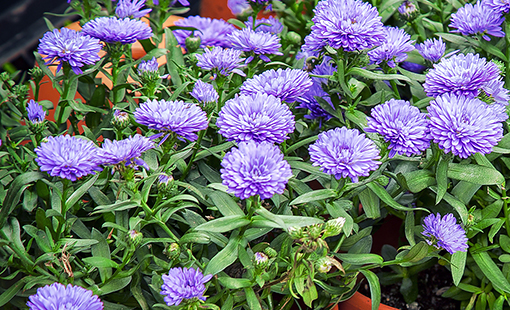
These actually are hardy. Asters are native to New York. You'll see them blooming in meadows in September, but the wild variety is tall and spindly, often falling over. The domesticated types are compact, stay upright, and are still hardy, providing years of fall color – blue, pink or white.
Ornamental Cabbage and Kale
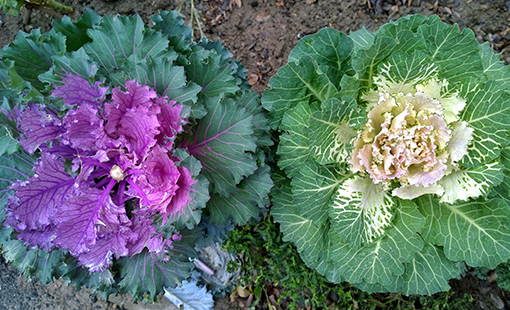
These have been selected for their red or white central foliage, providing a splash of color right up until Thanksgiving. Often used as a garnish in restaurants, so I guess they're edible. At least, I always make sure to eat my kale garnish. I hate to see good kale go to waste.
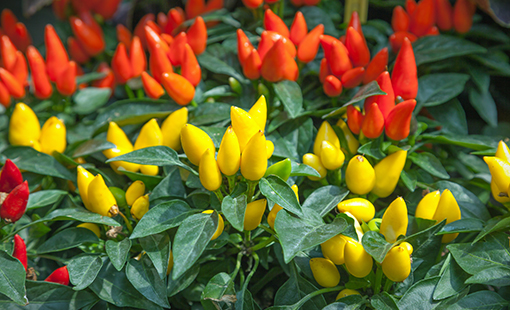
Ornamental Peppers
Of the hundreds of varieties of peppers on the market, several are grown purely as ornamentals. These are edible, although most are very hot. Midnight Fire and Purple Flash are popular varieties. “Calico” sports variegated foliage in addition to its black fruits.
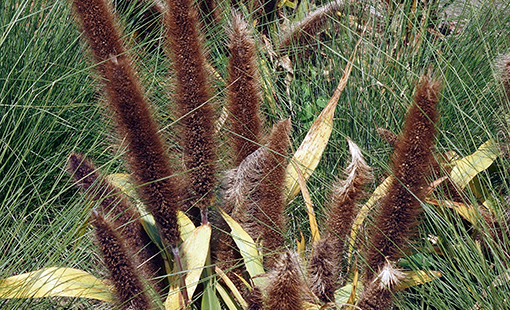
Millet
One of the world's staple grain crops. Ornamental millet is grown for its compact growth habit, but still produces tall spikes laden with seeds that are prized by people and birds – especially gold finch.
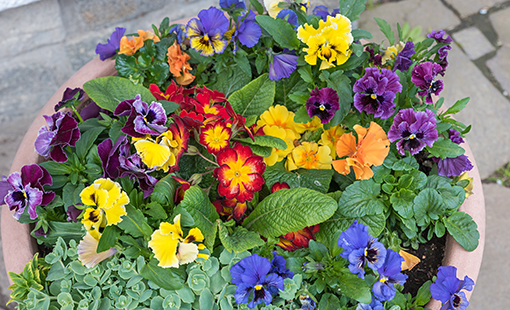
Fall Pansies
Years ago, pansies were planted outdoors in the fall, overwintered and then dug up in the spring, plopped into two-quart baskets and sold at local garden centers. My grandfather used to do it that way. He spread straw over the pansy patch to make sure they survived the cold weather. Nowadays, maybe because of global warming, pansies usually make it through the winter, especially if they're planted early enough to grow some roots into the surrounding soil.
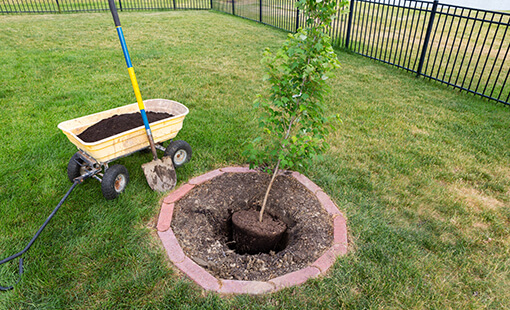
Fall is for Planting
Trees, shrubs and perennial flowers are often planted in the fall. The trick is to make a hole big enough to surround the root ball with good rich soil. Do not let the soil dry out – keep it watered right into December. Use stakes and guy wires to keep the trees upright until the new roots take hold. Evergreens, especially broadleaf evergreens, like rhododendrons, need special protection – burlap coverings or at least an anti-desiccant (“Wiltpruf”) so they don't lose too much water the first year.